Chinese Roast Duck, A Global Expression
We make mastery repeatable.
Peking duck takes five to ten years to learn, which is why it never made it into American kitchens. We rebuilt it as a supply chain — the prepared duck, the equipment, the process and the training — so it arrives as something you order, not something you have to master. It is the first dish. It will not be the last.

Made in USA
Plant No.1 — Irwindale, Los Angeles County.
Crispy and tender, and more Americans are ordering it. Until now it took a high-end chef. Without standardization and a supply chain, there is no scale.
U.S. duck demand, and the capacity behind it
The average American eats 0.35 lb of duck a year — roughly 120 million pounds nationally, or about 29 million birds, in line with published US slaughter figures.
- 29Mbirds a year — the United States today
- 88Mif America ate duck at the European average. Conservatively three times today. That is 59 million more birds a year.
- 73times the annual capacity of our own Plant No.1. The constraint is qualified supply.
Those are whole birds. Portioned into a pizza, a burger or a taco, one bird serves several times as many guests.
Estimate. 335 million people × 0.35 lb ÷ roughly 4 lb of edible meat per bird ≈ 29 million birds. Per-capita duck consumption in France is close to ten times the U.S. figure; the scenario above uses three times the EU average as the conservative case.
Persistence Market Research · IBISWorld · Market Research Future
What one duck can do
Six operations. One supply chain.
Each one has a different problem. The supply chain behind all six is the same. Start with the one closest to yours.

A signature dish, identical in every store
An open kitchen, heavy traffic, and one dish the whole brand is judged on. A store that opened last month with an all-new crew has to put out the same plate.
Prepared duck · dedicated equipment · SOP card · 10-day certification
What arrives is prepared duck, made to our formula and ready to rack — not a raw bird. The roasting program lives in the equipment. The SOP card covers racking, roasting, resting and carving, and your people certify at our plant.
Eighteen stores, no duck master on staff
Xiao Da Dong is the fast-casual chain of the Da Dong group, and the leader in that segment at home. Eighteen of its stores run duck without a duck master: about 50 birds a day per oven, five days to certify an operator, ten for a carver. Opening store nineteen stops being a hiring problem and becomes a purchase order.

One dining room, one reputation
The duck is why people book the table. But a single restaurant cannot carry a master’s salary, and it cannot survive the week he does not come in.
Whole prepared ducks · scheduled deliveries · rack and roast
Same specification every delivery. No carving station to build, no specialist to keep on payroll — the skill sits in the duck and in the program, not in one person’s hands.
More than thirty regional names, duck on the signature list
More than thirty well-known regional full-service restaurants in China now serve our roast duck, most of them as one of the dishes the room is known for. These kitchens take a higher grade of prepared duck than the fast-casual chains do — a better breed of bird, the same process behind it.

A counter, a line, and a ticket time
Chinese fast food runs on speed and a low check. A duck wrap has to leave the counter in the time it takes to hand back change, and the person making it was hired last week.
Carved and portioned at the plant · the store rolls and serves
The duck arrives sliced and weighed. Pancakes, sauce and garnish ship with it. The store assembles — it does not cook, and it does not carve.
Sold by the roll, not by the bird
For the American market this format sells rolled: duck, cucumber and scallion already wrapped in the pancake, priced per roll, handed across the counter in seconds. Nobody carves to order and nobody plates. One portioned tray becomes a shelf of rolls.

The premium protein already on Western menus
American kitchens treat duck as chef territory: a premium protein with more than twice the iron of chicken breast, and a price that reflects it. The limit was never appetite. It was who could cook it.
Prepared duck · the program in the oven · no open flame
The traditional oven needs live fire, a hood, and a building approval most landlords will not give. Ours needs an outlet. Crisp skin comes from the program, not from feel.
A signature dish that does not depend on one hire
You can put it on the menu without rebuilding the kitchen around it, and without a cook who spent a decade learning to carve.

Hourly crew · six-minute ticket · standardized line
Anything that depends on feel dies here. At 12:15 the plate has to be identical whoever is on shift. If it cannot be, it should not be on the menu.
Carved and portioned at the plant · the store assembles
Pizza, burger, taco, burrito — the duck is cut to the format before it leaves the plant. No carving station, no new position, no change to the labor model.
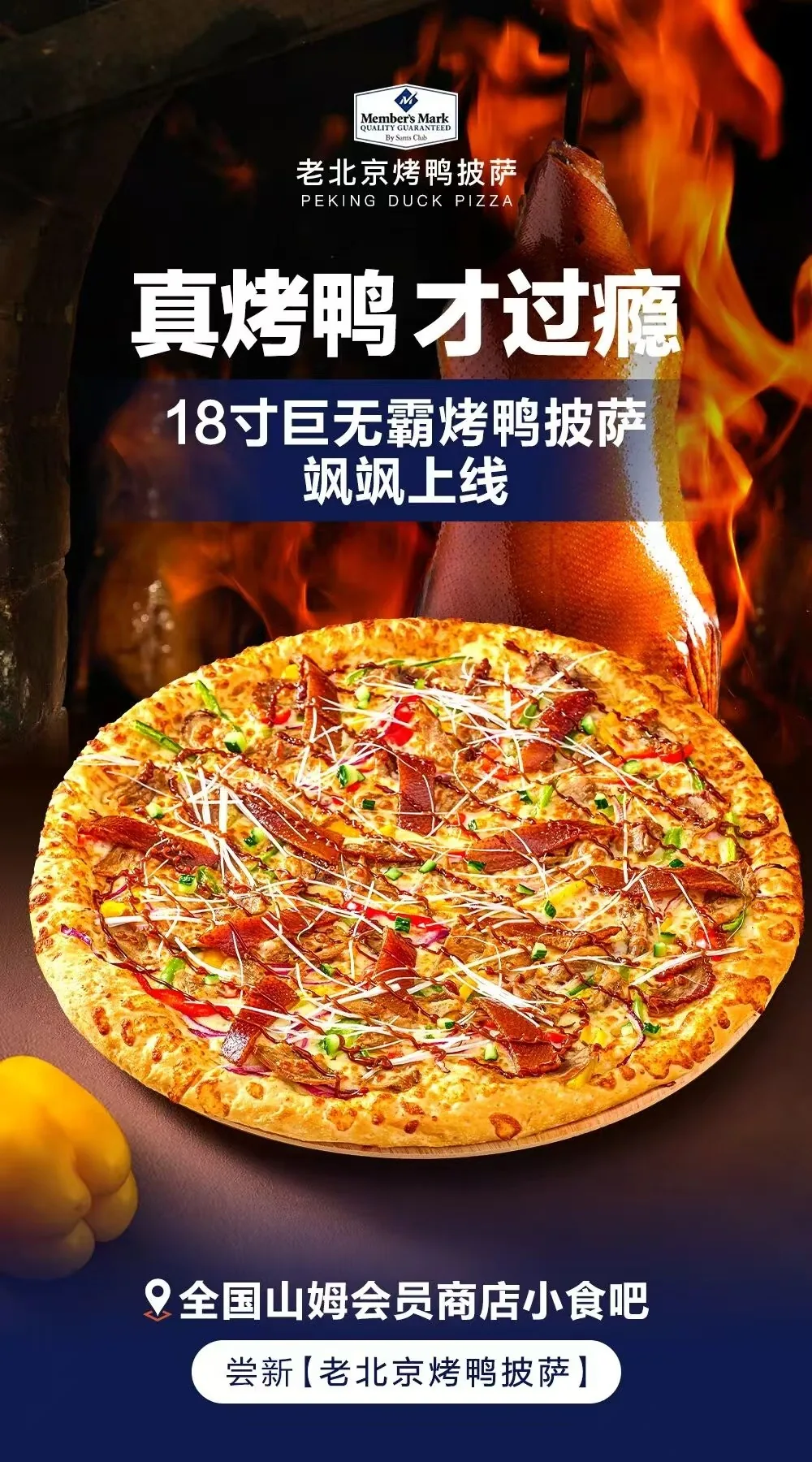
An 18-inch Peking duck pizza, already on a nationwide menu
Sold under Member’s Mark, Sam’s Club’s own label, in its cafés across China. For a build like this, what we supply is the duck on top, and the formula can be licensed for production.

Corporate dining · buffet lines · casino floors · cruise ships
Closed sites, heavy foot traffic, and a kitchen whose size and venting someone else already decided. Corporate campuses are the clearest case: a large technology company’s dining hall serves thousands a day, and Asian food is already what much of that room chooses. The venue needs a dish people talk about, and it cannot have one that runs on live fire.
No open flame · the footprint of one oven · production you can schedule
Smoke and grease are handled inside the unit, so it fits where a hooded oven cannot. The program sets the output, so 400 covers can go on the schedule a day ahead.
Built for exactly these constraints
Everything the traditional method needs — the fire, the flue, the decade of training — is exactly what a venue like this cannot provide.
Made for the retail shelf

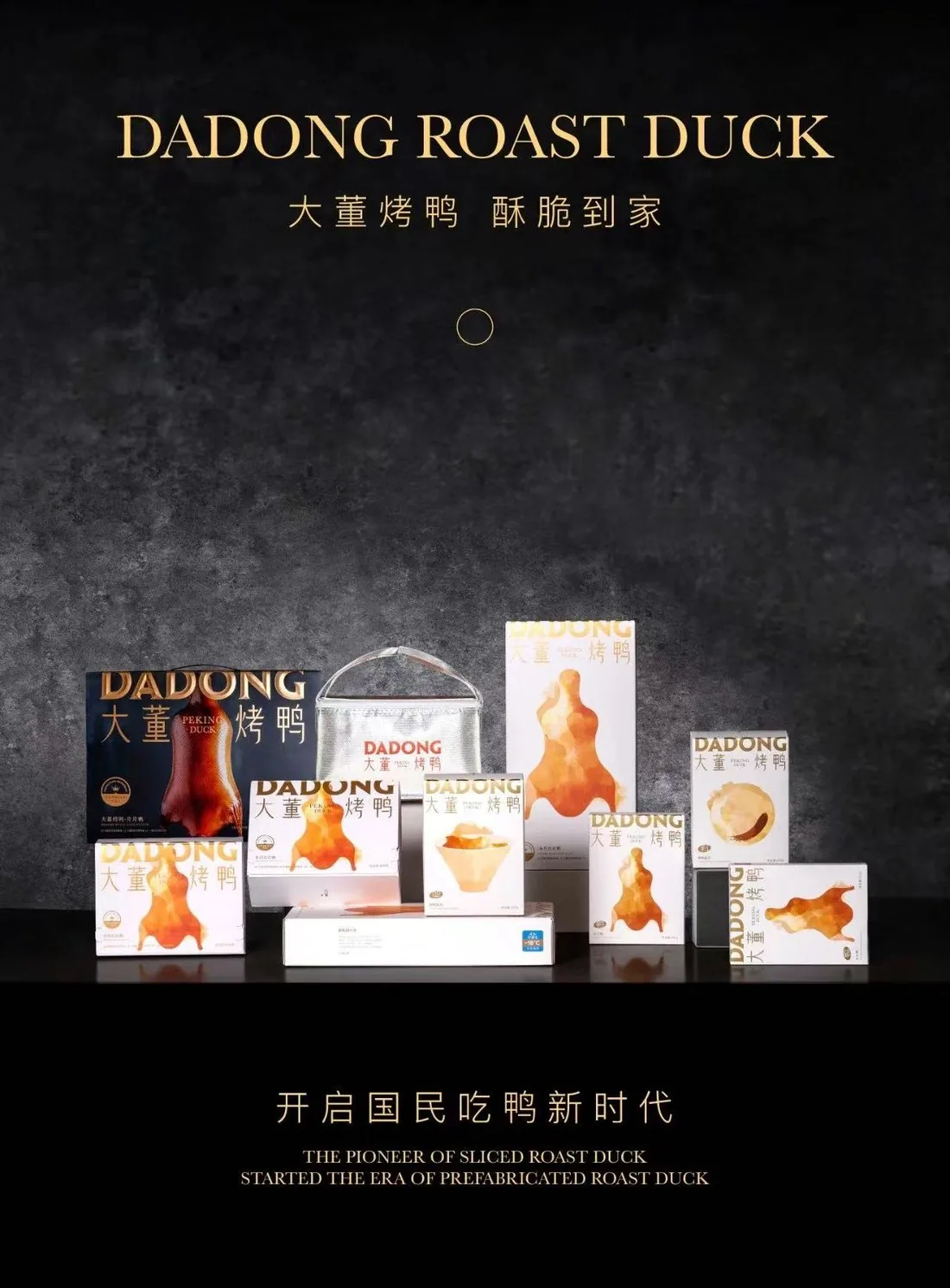
Duck moves at retail in more than one form — sliced packs, whole birds, heat-and-serve. Getting onto a shelf at that level means a written specification, batch traceability, cold-chain that holds, and a plant the retailer can walk through and audit. Ours is built to that bar.
Every retail duck product for one of China’s best-known roast duck brands is made at our group’s plant, including the packs that reach club-store shelves — same spec, same line, audited by the customer on site. In the United States the channel is Funtree, a group company that has been placing Chinese food brands on American shelves since 2015.
How it holds together
Empowerment by equipment
The roasting program lives inside a Convotherm unit developed with Welbilt. Load, select, run. When we release a new item, the parameters go out to the ovens remotely and the kitchen loads them in one step.
Shared worldwide
One process standard, licensed and taught, so the same plate can be served in Beijing, in Los Angeles and in Madrid without a master in each kitchen.
Training and operating support
Your people certify at our plant in Irwindale: five days for a roasting operator, ten for a carver. Beyond the equipment, we work on what decides whether the dish sells — kitchen flow, where the station goes, how it reads on the menu, how it is plated and served.
Innovative cold chain
Frozen and chilled lanes from our plant to your back door, on a schedule you can forecast against like any other line item.
Superior breeding stock
It starts with a bird raised to a written spec. Finding and building the upstream partnerships that can supply that bird in the United States is a long-term commitment for us, and an open one — we are looking for growers to build it with, not around.
Standardized equipment × standardized duck = standardized results.
We own the plant and the production line
A specification only means something if someone owns the line it is held on. Ours is a building in Los Angeles County that we own and are fitting out ourselves — not a co-packer’s line. First commercial production is September 2026, and customers can walk the line their own specification will be held on.
Pictured: the group’s existing line in China. Irwindale is under retrofit and is being built from this one — we are copying a line that already runs, not designing a new one on paper.
Our global equipment partner

Welbilt & WheaTech Group Standardization R&D Center
Welbilt is our strategic equipment partner and part of Ali Group. The roasting program was developed jointly and is written into the machine.
The center is in Leling, Shandong. The parameters are developed there and they are kept there.
 A Convotherm leader presenting “Intelligent Connected Kitchen Technology — bridge between tradition and globalisation” at the 2025 Global Chinese Cuisine Summit.
 Welbilt and WheaTech Group cooking together in one working kitchen at the conference.
 The partnership was announced at the 2025 Global Chinese Cuisine Summit.

Times Square, then Rockefeller Center
On September 7, our artwork takes over the vertical screens in Times Square. On September 8, the 2026 Global Chinese Cuisine Summit opens at The Rainbow Room, under the guidance of the World Federation of Chinese Catering Industry.
At Rockefeller Center — Steven C. Rockefeller III, Managing Partner of Rose Rock Group, is among the guests, alongside Chef Dong Zhenxiang.
- 2024Tokyo, Japan
- 2025Singapore
- 2026New York, USA
- 2027Paris, France
- 2029Australia
Tell us what you run
A dining room, a fifty-location chain, a retail program, or a link in the chain you want to supply. Send the format, the number of locations, the volume you expect and the market. We come back with the configuration, the lead time and the production window we can give you.